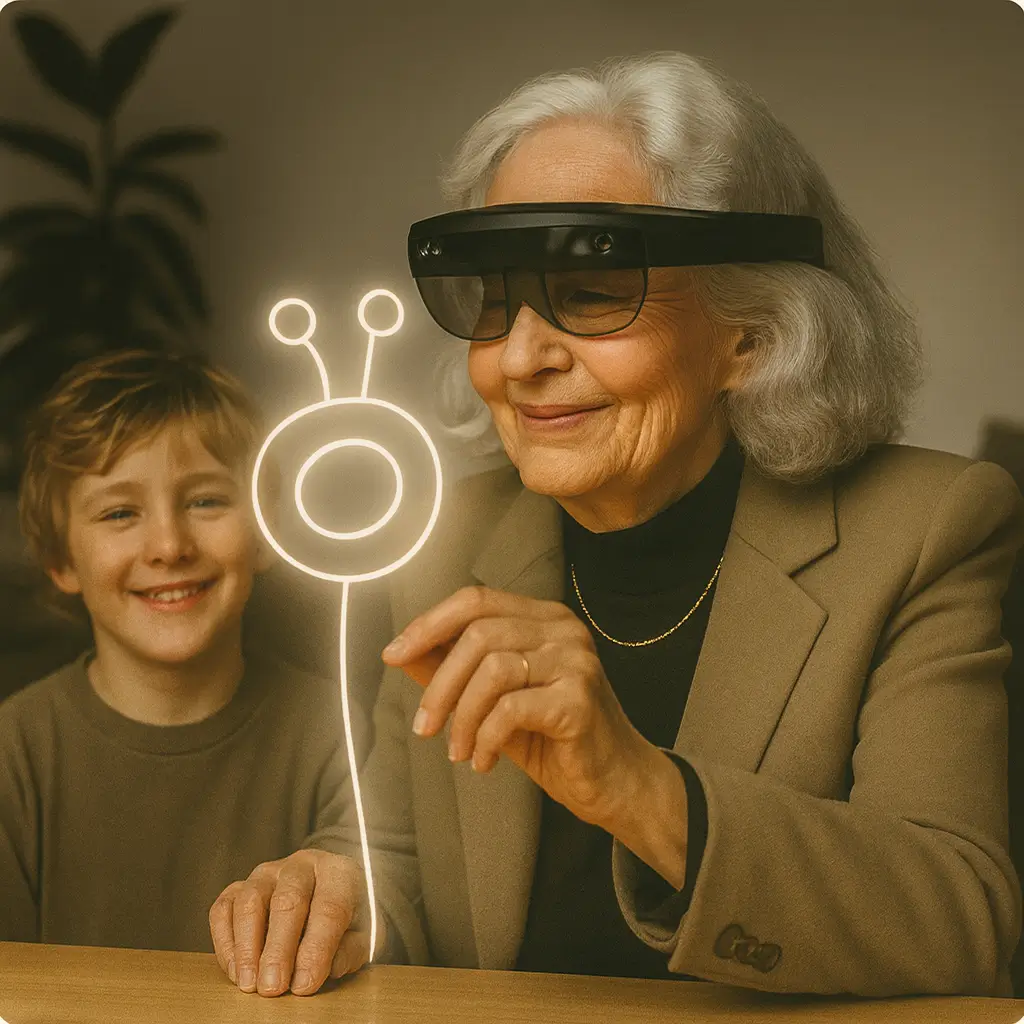
We work so that every family member can turn technology into a tool that brings out the best in them.
Technology for the Family
It’s not about
Controlling Screens
but about creating conversations, supporting human development and learning to use technology in a gentle, human way, aligned with the living system we are part of.
How Digital Use Affects Young People’s Mental Health
Less time spent studying
44.6%
Reduced participation in cultural activities
12.9%
Less time spent with friends
9.4%
More time spent alone
26%
Compulsive use of digital services (risk: ages 15–24)
11.3%
Compulsive use of digital services (risk: ages 15–24)
33%
Data source: Confederación Salud Mental España
Social Media
Can also be a healthy space
They allow us to connect, have conversations, and build communities around shared interests
Many people find support, companionship, and understanding
What We Should Know
Cybersecurity
Being mindful of how we act in our online lives. Who is watching us in our private moments?
“Fake News”
In the information Age, the challenge is to distinguish what is real from what is not. Pausing to think before sharing is an act of digital responsibility.
Artificial Intelligence
AI learns from the world it mirrors. If the reflection is distorted, so is the intelligence.
Privacy
When we know we are being watched, we are no longer ourselves. In the age of data, privacy is freedom.
Algorithmic Bias
When algorithms “learn” our prejudices and turn them into invisible rules, reality narrows to what we see. We become polarised.
Digital Identity
Every piece of data, click, comment, or image you share leaves a trace. From that trace, a profile of you is built: your digital identity.
ub Insight:
The human brain favours what confirms its beliefs more than what challenges them — a phenomenon known as confirmation bias, what makes fake news so powerful and dangerous.
ub Insight:
Algorithmic bias cannot be solved by technology alone. It requires human diversity: more voices, more perspectives, and greater ethical responsibility in how algorithms are designed.
To transcend
Technology has changed our tools, our rhythms and the way we inhabit the world.
Many of the things that once required time, waiting and presence now happen instantly.
However, creation still has the power to awaken what is most human within us.
El pulso de la creación
La tecnología cambió nuestras herramientas, nuestros tiempos y la manera en que habitamos el mundo.
Muchas de las cosas que antes requerían tiempo, espera y presencia, hoy ocurren de manera inmediata.
Sin embargo, es precisamente en la creación donde se activa lo más humano de nosotros.
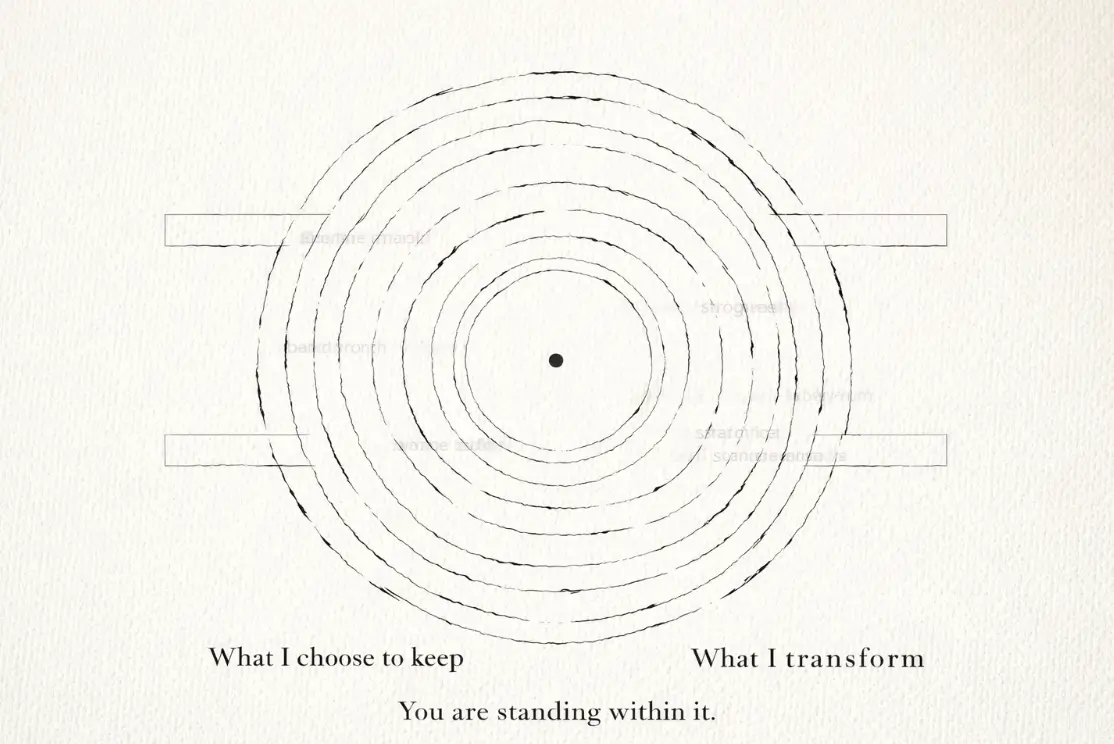
This piece represents the trunk of a tree. Each of its rings preserves information over time. Trees grow outward, but their history remains within.
• Mentally place yourself over the black point. Inside the trunk.
• Reflect on what you consider important to preserve and what you believe needs to transform in the way you live your life today.
• On the left, write what you wish to preserve. On the right, write what you believe should evolve.
For this experience, you should use handwriting. You may print this document or write on a separate sheet of paper. The brain processes more deeply what we write by hand.
Remember:
Not everything new is progress. Nor does everything old deserve to disappear.
zoom inzoom out
Stop!
Science requires observation. Human discoveries arise when we stop and observe what cannot be seen at first sight. Today we know that multiple phenomena exist even when they cannot be perceived with the naked eye.
The same happens in human relationships and in the way we bond with technology. Human beings interpret, feel and give meaning to details, while machines process information and data, even when they do so in a manner we now call “intelligent”.
The future is uncertain, but refining our perception and slowing down still remain in our hands. That is why we created this piece.
Now:
• Drag the slider down to reveal. • Not everything is visible up close. • Observe these patterns.
What do you see? — What changed when you observed more carefully?
Remember:
There are things that are not evident, but are still there.
Acercar +Aeljar -
¡Detente!
La ciencia requiere observación. Los descubrimientos de la humanidad surgen al detenerse a observar aquello que parece invisible y hoy sabemos que existen múltiples fenómenos aunque no sean percibidos a simple vista.
Lo mismo ocurre en las relaciones humanas y en la manera en que nos vinculamos con la tecnología. El ser humano interpreta, siente y otorga significado a los detalles mientras que las maquinas procesan información, datos, aunque lo hagan de una manera que hoy llamamos “inteligente”. El futuro es incierto, pero afinar nuestra percepción y bajar la velocidad sigue estando en nuestras manos. Por ello hemos creado esta obra.
Ahora:
• Mueve el deslizador hacia abajo. • Observa cómo la imagen revela lo que oculta. • Observa estos trazos.
¿Qué ves? - ¿Qué cambio cuando observaste mejor?
Recuerda:
Existen cosas que no son evidentes, pero siguen estando ahí.
Esta pieza representa el tronco de un árbol. Cada uno de sus anillos guarda información que conserva con el paso del tiempo. Los árboles crecen hacia afuera, pero su historia permanece dentro.
• Ubícate mentalmente sobre el punto negro. Dentro del tronco.
• Reflexiona sobre aquello que consideras importante preservar y aquello que crees que necesita transformarse en la manera en que habitas tu vida hoy.
• A la izquierda pon aquello que deseas conservar y a la derecha, aquello que consideras que debe evolucionar.
Para esta experiencia debes utilizar la escritura manual, por tanto puedes imprimir este documento o escribir en una hoja aparte. El cerebro procesa de manera más profunda aquello que escribimos a mano.
Recuerda:
No todo lo nuevo es progreso. Ni todo lo antiguo merece desaparecer